
Mudra: The Yogic Wisdom of Sacred Gesture
The most portable of practices is maybe one of yoga’s most underestimated tools
The science of mudra — comprising hundreds of documented gestures, postures, locks, and internal attitudes — constitutes one of the most comprehensive technologies of human self-regulation ever devised. And while it has remained somewhat in the shadow of yoga’s more visible practices (asana, pranayama, meditation), a growing body of neuroscience and clinical research is beginning to illuminate what traditional practitioners have known for millennia: that the intentional shaping of the body, particularly the hands, has measurable effects on the brain, the autonomic nervous system, and the quality of conscious experience.
The Sanskrit word mudra has several overlapping meanings. The most common translations are “gesture,” “seal,” or “attitude.” The Kularnava Tantra traces it to two roots: mud (meaning “delight” or “pleasure”) and dravay (meaning “to draw forth”) — suggesting a gesture that awakens latent potential. As a “seal,” a mudra is something that closes a circuit, preventing the dissipation of energy and redirecting it inward toward a specific purpose.
In its broadest sense, a mudra is any deliberate, structured physical attitude that simultaneously affects the body, the energy system (prana), and the mind.
This definition is wide enough to encompass finger positions, eye movements, tongue placements, muscular contractions, and entire body postures — which is precisely how the tradition has always used the term. Mudras range from the subtle — barely perceptible adjustments of the fingertips during meditation — to the dramatic: the full-body inversions, intense muscular locks, and advanced internal practices that belong to hatha yoga’s most esoteric dimensions.
The Five Categories of Mudra
The classical yoga tradition organizes mudras into five broad families, each engaging a different layer of the physical and subtle body:
1. Hasta Mudra (Hand Gestures)
The most familiar category, and the one most commonly associated with the word “mudra” in modern yoga contexts. Hasta mudras involve specific configurations of the fingers and hands — touching, folding, pressing, extending — that are held during meditation, pranayama, asana, or daily activity. They are rooted in the Pancha Tattva (five great elements) theory, according to which each finger corresponds to one of the five elements: the thumb represents Fire (Agni), the index finger Air (Vayu), the middle finger Space or Ether (Akasha), the ring finger Earth (Prithvi), and the little finger Water (Jala). By bringing different fingers into contact with one another, the practitioner is understood to balance, increase, or diminish the corresponding elements within the body’s energetic economy.
Classical texts describe hasta mudras as directing prana — the subtle life energy — back into the body, rather than allowing it to dissipate outward through the fingertips.
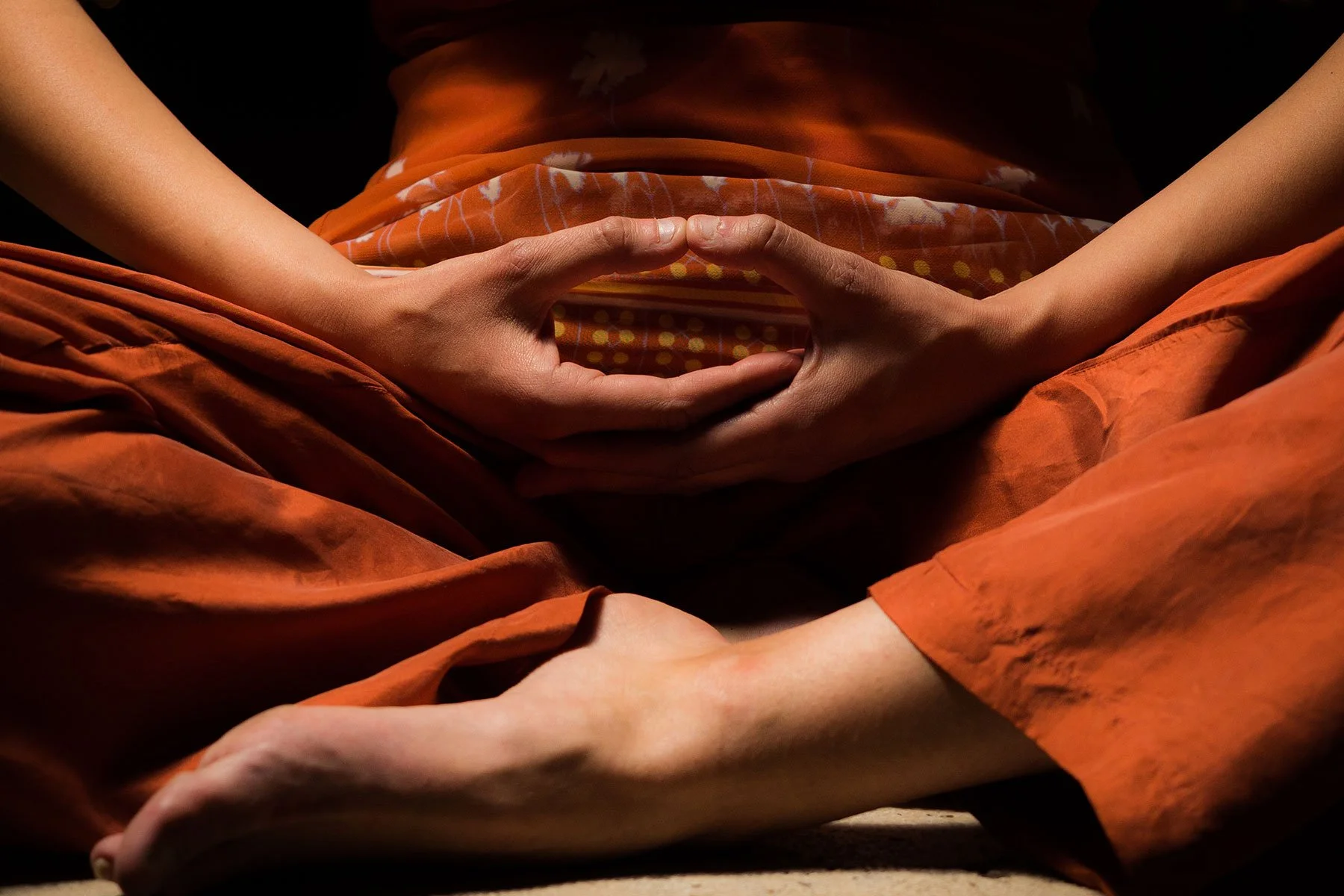
In neurological terms, as we will explore below, they engage the dense neural networks of the hands, stimulating specific regions of the sensorimotor cortex in patterns that influence cognition, mood, and autonomic function.
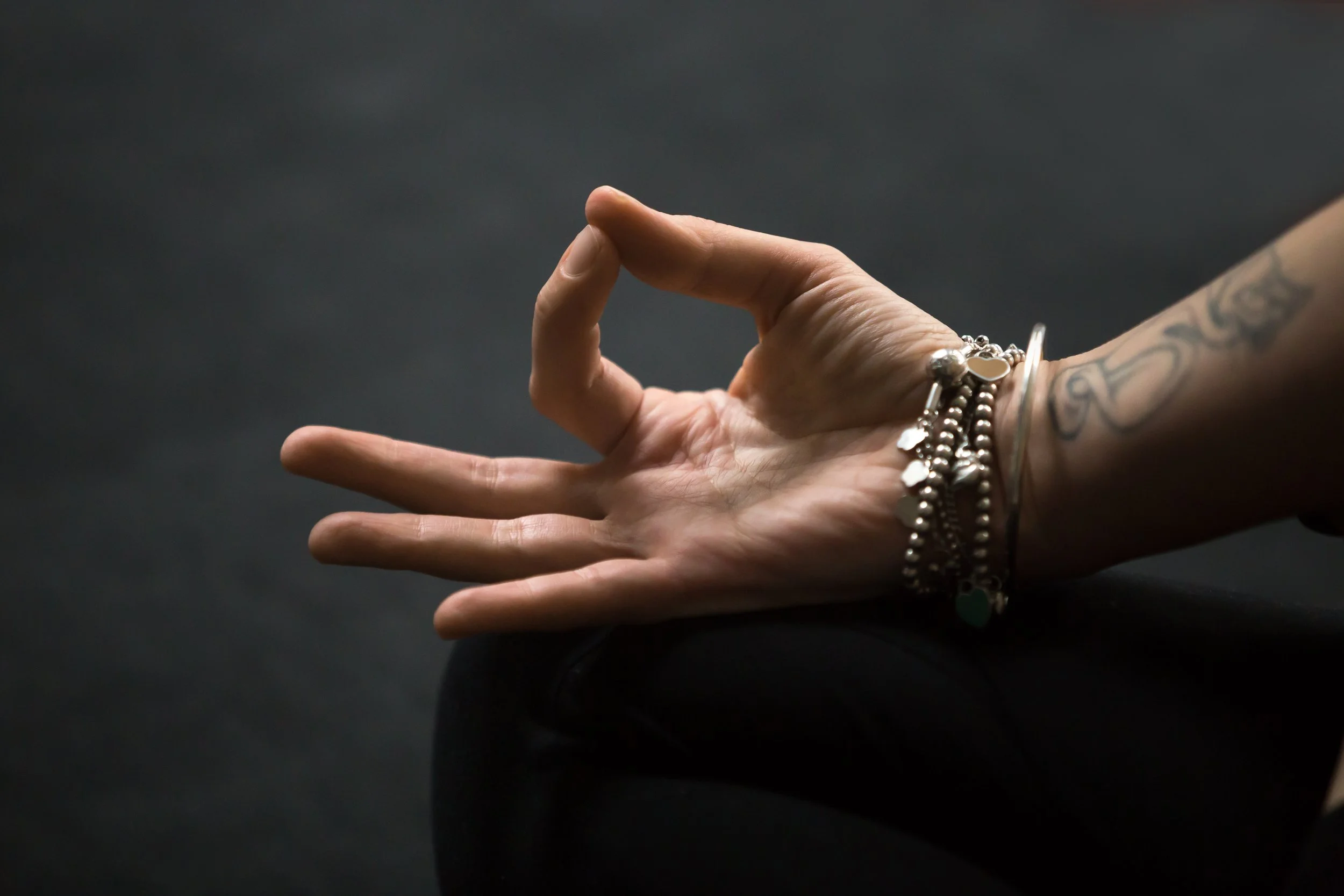
Notable hasta mudras include Gyan/Jnana Mudra (index tip to thumb tip, the gesture of wisdom and knowledge), Chin Mudra (a variation of Gyan with the palm facing downward), Prana Mudra (ring and little fingertips to thumb, energizing and vitalizing), Apana Mudra (middle and ring fingertips to thumb, cleansing and grounding), Vayu Mudra (index finger bent to the base of the thumb, calming excess air), and Apana Vayu Mudra (a combination supporting heart function).
2. Mana Mudra (Head and Sense Organ Gestures)
Mana mudras engage the sense organs of the head — eyes, ears, nose, tongue, and lips — to direct awareness inward and deepen meditative absorption. They are particularly important in kundalini yoga and form a central part of pratyahara (sense withdrawal) practice. The Shambhavi Mudra (turning the gaze upward and inward toward the point between the eyebrows — the ajna chakra or “third eye”) is one of the most powerful and widely practiced. Shanmukhi Mudra involves closing all seven “gates” of the head (two eyes, two ears, two nostrils, and the mouth) with the fingers and thumbs, withdrawing completely from external sensory input. Khechari Mudra involves curling the tongue backward toward the soft palate — considered in tantra to be one of the most potent of all mudras, traditionally cultivated through gradual extension of the frenulum over years of practice.
3. Kaya Mudra (Postural Gestures)
Kaya mudras engage the entire body in a combined gesture of posture, breath, and intention. They represent the intersection of asana and mudra, transforming a held physical posture into an energetic and meditative vehicle when sustained with concentrated awareness. Viparita Karani (the “inverted action” — legs elevated against a wall or in a shoulder-stand variant) is a classic kaya mudra, believed to reverse the usual downward flow of prana apana and redirect energy upward through the central channel (sushumna nadi). Yoga Mudra (seated forward fold in Padmasana with hands clasped behind the back) combines physical stretch with inward concentration and surrender. Like Tratak and Yoga Nidra, kaya mudras are understood to work simultaneously on the physical, energetic, and psychological dimensions of the practitioner.
4. Bandha Mudra (Energy Locks)
Bandhas are internal muscular contractions that seal and redirect the flow of prana within the body’s central energy channels. The three primary bandhas — Mula Bandha (root lock: contraction of the perineal floor), Uddiyana Bandha (abdominal lock: drawing the abdomen inward and upward on exhalation), and Jalandhara Bandha (throat lock: tucking the chin to the chest) — are classified as mudras in the classical texts because they function as energetic seals, preventing the dissipation of prana and directing it upward through the spine toward the higher energy centers. Maha Bandha (the “great lock”) combines all three simultaneously. Bandhas are typically combined with breath retention (kumbhaka) during pranayama practice, and their physiological effects — on intra-abdominal pressure, diaphragmatic function, vagal tone, and the autonomic nervous system — have been investigated in several modern studies.
5. Adhara Mudra (Perineal Gestures)
The subtlest and most esoteric category, adhara mudras involve the musculature of the pelvic floor and are associated with the awakening of kundalini — the dormant spiritual energy believed to reside at the base of the spine. They overlap significantly with the bandhas and are generally taught only in advanced stages of yogic training, under direct guidance from a qualified teacher.
Brainwave Modulation
Several studies have found that specific mudras alter electroencephalographic (EEG) activity in measurable ways. Research has shown that different hand gestures can activate specific areas of the brain and alter brainwave activity — for example, studies have shown that certain mudras can increase alpha and beta brainwaves, which are associated with relaxation, concentration, and focus. Alpha waves (8–14 Hz) are consistently associated with relaxed attentiveness and reduced mental chatter; theta waves (4–8 Hz) with deep creative and meditative states. The reported shift toward alpha and theta activity during mudra practice mirrors the brainwave profiles observed in experienced meditators and is consistent with the autonomic calming effects documented in clinical studies.
How to Reset
Join us for this class combining Yoga Nidra, Tratak, Mudras, and Pranayama in-person at Lipé House of Wellness (Coral Gables, FL)
This nourishing weekly practice offers a sacred hour to pause, breathe, and return to your center. Bring a yoga mat, water bottle, and an open mind. All other props provided. Reserve your spot and begin your weekly reset practice. For registration and more information, contact Lipé House of Wellness. Fridays 1:00 - 2:00 PM at Lipé House of Wellness, Coral Gables. Drop-in friendly | Available also through Classpass.
